Cheap Japanese Cooking: A Simple Art Discount Review Shop
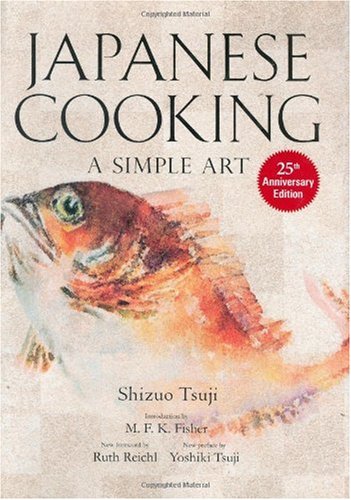
I've bought (or at least paged through) dozens of other Japanese cookbooks before and after I bought "Japanese Cooking" more than 25 years ago: And this is literally the only one I use, and the only one I could ever recommend. I think that's because I prefer books that help me understand the thought behind techniques and ingredients, and provide insight into the culture that created it. There are only a handful of books that do this really well (Wolfert's "Cooking of Southwest France" springs to mind).
It's uncompromising; but while I have never once shaved a block of dried bonito to make dashi, and I doubt that you will either, it's really the idea of using great ingredients and painstaking preparation to showcase that great chunk of fish or bunch of spinach. The seasonings are limited (by most standards), and I believe that forces me to carefully consider the major component of the dish--its flavor, texture, color, presentation. How is that best done with this particular piece of whatever? And that ingredient can, I think, be an every-day, supermarket kind of ingredient, if you choose carefully from what's in season--an idea that should be common to all kinds of cooking.
There are lots of techniques explained in this book that are both easy to accomplish and easy to translate to other styles (salting techniques, for example, explained long before the Zuni cookbook arrived in our kitchens).
If you're interested in Japanese cooking, this is a great book. If you're interested in "why" as well as "how" things are done, this is a great book.
 Available at Amazon
Cheap "Japanese Cooking: A Simple Art" Discount Review Shop
"Japanese Cooking: A Simple Art" Feature
- ISBN13: 9784770030498
- Condition: New
- Notes: BUY WITH CONFIDENCE, Over one million books sold! 98% Positive feedback. Compare our books, prices and service to the competition. 100% Satisfaction Guaranteed
"Japanese Cooking: A Simple Art" Overview
When it was first published, Japanese Cooking: A Simple Art changed the way the culinary world viewed Japanese cooking, moving it from obscure ethnic food to haute cuisine.
Twenty-five years later, much has changed. Japanese food is a favorite of diners around the world. Not only is sushi as much a part of the Western culinary scene as burgers, bagels, and burritos, but some Japanese chefs have become household names. Japanese flavors, ingredients, and textures have been fused into dishes from a wide variety of other cuisines. What hasn't changed over the years, however, are the foundations of Japanese cooking. When he originally wrote Japanese Cooking: A Simple Art, Shizuo Tsuji, a scholar who trained under famous European chefs, was so careful and precise in his descriptions of the cuisine and its vital philosophies, and so thoughtful in his choice of dishes and recipes, that his words--and the dishes they help produce--are as fresh today as when they were first written.
The 25th Anniversary edition celebrates Tsuji's classic work. Building on M.F.K.Fisher's eloquent introduction, the volume now includes a thought-provoking new Foreword by Gourmet Editor-in-Chief Ruth Reichl and a new preface by the author's son and Tsuji Culinary Institute Director Yoshiki Tsuji. Beautifully illustrated with eight pages of new color photos and over 500 drawings, and containing 230 traditional recipes as well as detailed explanations of ingredients, kitchen utensils, techniques and cultural aspects of Japanese cuisine, this edition continues the Tsuji legacy of bringing the Japanese kitchen within the reach of Western cooks.
"Japanese Cooking: A Simple Art" Specifications
Japanese food was virtually unknown in many Western cities in the 1980s, when Shizuo Tsujii wrote Japanese Cooking: A Simple Art. M.F.K. Fisher's introduction eloquently sets the stage for Tsujii's classic work. It may be the most thought-provoking piece ever written about Japanese food for non-Asians, pointing out how food and even the physical act of eating differ from what they are in Japan. Tsujii's writing is clear and educational. He talks specifically to a Western, non-Asian audience, demonstrating far more awareness of our culinary preferences and prejudices than most Westerners have for his. Following the preface (which should not be skipped), an arrangement of color photos of key ingredients and dishes sets the scene. Next, part 1 provides a thorough explanation of techniques for Japanese cooking and instructions for making all the basic elements of dishes. These "lessons" cover cutting vegetables, steaming, grilling, and deep frying the Japanese way, and even how to make sushi. Recipes cover Basic Vinegar Salad Dressings, Sushi Rice, and Teriyaki. To prepare Vinegared Octopus, a complete series of drawings clearly demonstrates each step.
Part 2 consists solely of recipes. Gather together fresh ginger, soy sauce, the sweet wine mirin , sake, and rice vinegar and you can make many of them. Beginners might start with Deep Fried Chicken Patties, Steak Teriyaki, Tortoise Shell Tofu, simply bathed in a tasty sauce, and Asparagus Rice, a light and colorful dish. Because of its combination of background information, comprehensive recipes, and excellent instructions, Japanese Cooking: A Simple Art will always remain an important book for learning about this simple yet complex cuisine. --Dana Jacobi
Available at AmazonCheap "Japanese Cooking: A Simple Art" Discount Review Shop

0 ความคิดเห็น:
แสดงความคิดเห็น